Facebook
 Google
 GitHub
 Linkedin
New Littelfuse SSRs Deliver Power in Small Packages
Littelfuse expands its solid-state relay lineup with three new models offering compact, high-power switching for industrial and OEM applications.
Littelfuse has expanded its solid-state relay portfolio with three new models designed for efficient, compact, and reliable load control. The SRP1-KC, SRP1-ME, and SRP4-CC relays offer high current switching, rapid response, and durable, arc-free operation—all in space-saving packages. Ideal for industrial and OEM applications, the expanded SSR line delivers faster performance and longer life than mechanical relays, reinforcing Littelfuse’s reputation for innovation in electrical protection and control solutions.

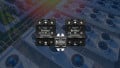
The new SSR lineup from Littelfuse. Image used courtesy of Littelfuse
The Switch That Doesn’t Move
A solid-state relay has no internal moving parts. This is important when switching electrical loads quickly and for switching high-current electrical loads. The relay works by utilizing transistors, thyristors, and a small electrical control voltage. Just like mechanical relays, the output circuit is closed when the control terminals are energized. Still, instead of mechanical contacts, the SSR uses a transistor to allow current to flow. These devices are important in equipment that needs to control resistive loads, such as heaters. Littelfuse, which is known globally for offering fuses and fuse holders along with capacitors, heaters, and power distribution devices, is expanding its line of solid-state relays.
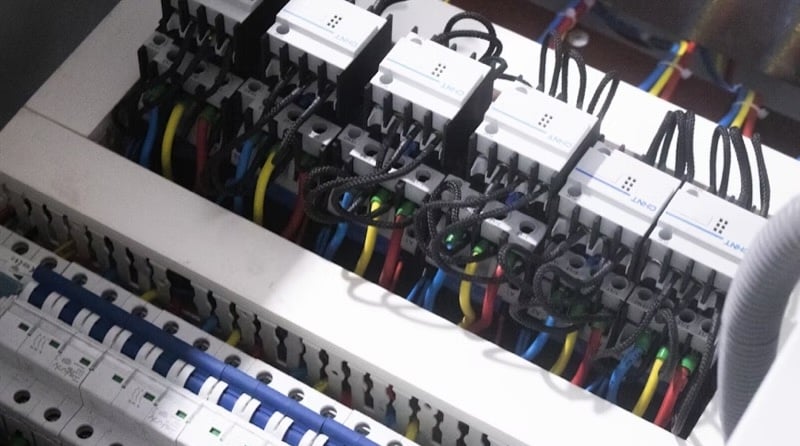
Typical installation of mechanical relays. Image used courtesy of Unsplash
SRP4 And SRP1 Solid State Relays
The solid-state relay is an important device when your application requires fast switching of constant current loads. Littelfuse has added three new versions of SSRs that will provide designers with more options when their design requires an SSR.
SRP4-CC: Utilizing the same footprint as a standard SCR, the SRP4-CC has four independently controlled relays. Each relay uses a blade-style connection, with the control connection being PCB pins in the center of the relay. An excellent choice for space-conservative panel designs. Capable of switching up to 240VAC at 20 A with a control voltage of 3-32 VDC.
SRP1-KC: Designed for OEMs, this compact SSR is low-profile and utilizes blade-style terminal connections. Capable of switching up to 240VAC at 12 A with a control voltage of 4-32 VDC.
SRP1-ME: A “puck-style” SSR designed with efficiency in mind. This relay can control one circuit with blade-style terminals and a compact form factor. The overall size of the relay is ¼ of standard puck-style relays and uses a back-to-back SCR design to offer a high-quality relay. Capable of switching up to 280VAC at 25 A with a control voltage of 4-30 VDC.
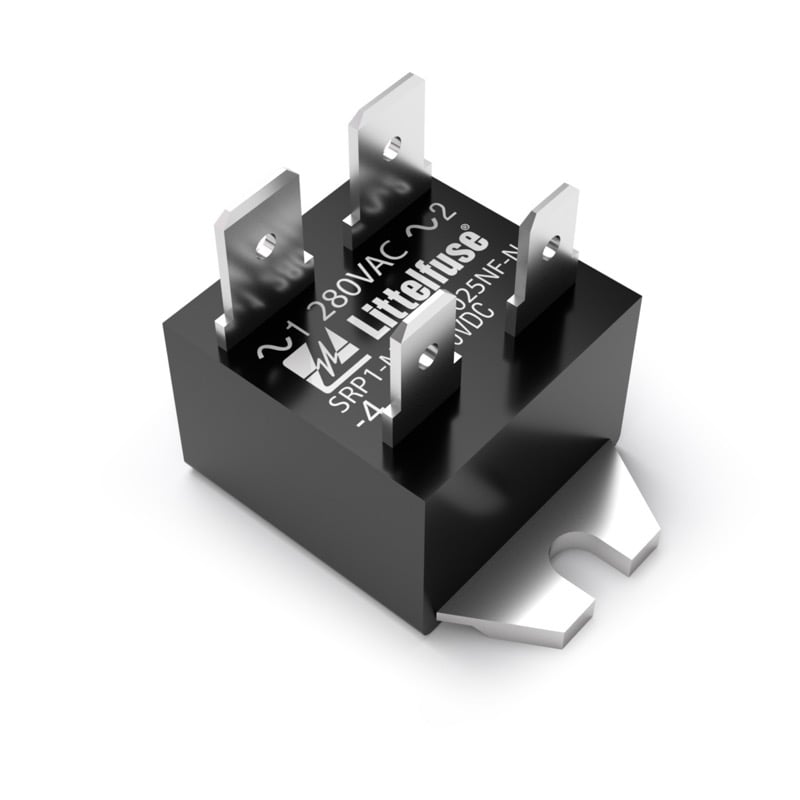
The new SRP1 Puck Style SSR. Image used courtesy of Littelfuse
Switching Electrical Loads Without Mechanics
When your system requires a fast switching of electrical loads, you need to use a solid-state relay.
An SSR doesn’t arc when switching loads. All of the new SSRs from Littelfuse are capable of switching fairly large loads, and this is because of the solid-state switching feature. With a mechanical relay, large loads will cause arcing, destroying the relay over time. The SSR can last much longer in these conditions.
SSRs switch faster. With mechanical relays, there is a specific amount of time for the contacts to close and allow current to flow through the relay. This is due to the distance the contacts need to be apart to break the circuit. With solid-state relays, this switching time is, on average, less than one millisecond. This fast switching time makes the SSR a perfect switch for controlling heating applications.
Littelfuse is already a global supplier of electrical protection and switching devices. Expanding its line of solid-state relays is staying competitive in a market that constantly drives innovation and new products.