Facebook
 Google
 GitHub
 Linkedin
Sanyo Denki Announces Standby UPS With 200% Overload Capability
The SANUPS N11D UPS provides backup power for motor-powered machinery subject to large fluctuating loads, offering up to 200% overload capability and 98.6% power conversion efficiency.
Sanyo Denki has launched the SANUPS N11D standby UPS, made to support industrial equipment with motors and changing loads. This UPS can handle up to 200% overload during backup, addressing issues found in elevators, robotics, and semiconductor tools.
The UPS is designed for industrial settings where voltage drops, inrush currents, and short overloads often occur. The unit offers high overload tolerance, efficient power conversion, and quick transfer times, all in a compact size.
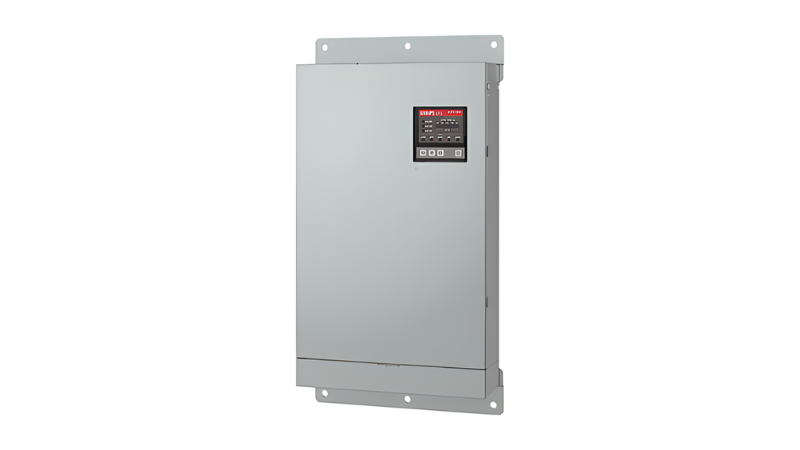
Sanyo Denki’s SANUPS N11D is available in three variants: a lead-acid battery model, a lithium-ion battery variant, and an electric double-layer capacitor version. Image used courtesy of Sanyo Denki
The SANUPS N11D Standby UPS
The SANUPS N11D is a standby UPS built for tough electrical environments. When power is low, it can briefly deliver up to 200% of its rated output, so it can handle motor start-up surges smoothly.
During normal operation, it can manage even higher short-term overloads. The system switches from grid to battery power in 10 ms or less, meeting SEMI F47 voltage sag standards. In backup mode, it keeps output voltage within ±3% and frequency within ±0.5%, ensuring stable power for sensitive equipment even when conditions change.
High Efficiency and Low Noise Operation
Energy efficiency is a key feature of the new system. The 3 kVA UPS model achieves up to 98.6% power conversion efficiency, lowering operating costs and reducing heat. Less energy loss means lower cooling requirements and longer-lasting components.
The UPS runs at about 30 dB in grid mode at full load, so it works well in quiet areas like control rooms or near operators. It is certified under Sanyo Denki’s Eco Product Plus program, and, according to Sanyo Denki, has a lower environmental impact than previous models.
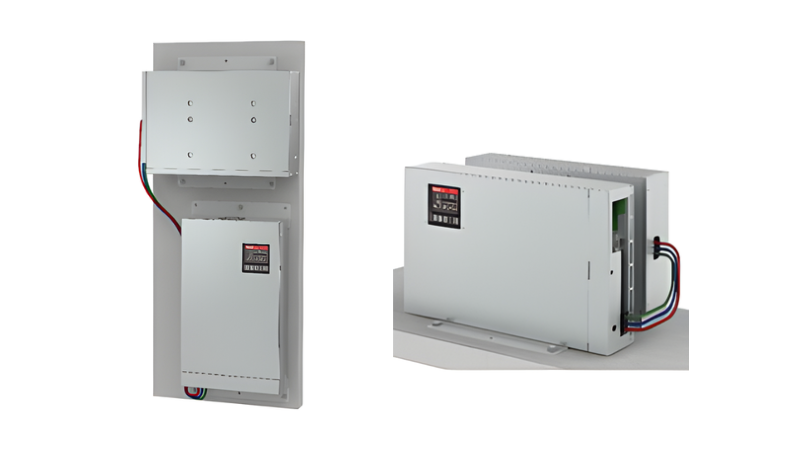
The SANUPS N11D can be wall-, panel-, or floor-mounted. Image used courtesy of Sanyo Denki
Energy Storage Options
The new SANUPS N11D offers three variants, allowing users to choose an energy storage solution that fits their needs and maintenance preferences. There is a lead-acid battery model for standard industrial backup, a lithium-ion battery model that is lighter and lasts longer, and an electric double-layer capacitor (EDLC) model for voltage sag protection and very short backup times. The EDLC model can also capture and reuse energy produced when motors slow down, improving efficiency in systems with frequent start-stop operations.
The UPS comes in rated capacities from 2 kVA to 3 kVA. For installation, the device has a slim enclosure that supports in-panel, wall-mounted, and floor-standing setups. The lithium-ion and lead-acid models allow the UPS unit and battery to be installed separately, making it easier to fit into tight spaces or existing setups.
Target Applications Across Industrial Automation
Sanyo Denki recommends the new SANUPS N11D for situations where reliable power is important for safety, productivity, or output quality. Target uses include commercial elevators, high-speed doors, industrial fans, cold storage systems, semiconductor manufacturing equipment, and robotics or motor-based automation platforms. In these settings, even short power interruptions can cause disruptions, equipment strain, or material waste, making fast, overload-tolerant backup power a critical requirement.
System designers and integrators can benefit from the new SANUPS N11D for their motor-driven equipment. It helps prevent disruptions to sensitive industrial processes, unlike traditional standby UPS units, which may trip, shut down, or face too much stress during motor start-ups or sudden changes.
Related Content