Facebook
 Google
 GitHub
 Linkedin
Carlo Gavazzi Adds Multi-Pole Power to Its NRG Relay Line
New RGC2 and RGC3 relays bring two- and three-pole switching to Carlo Gavazzi’s NRG platform, with built-in networking and real-time monitoring.
Carlo Gavazzi has expanded its digital relay catalog with the addition of the RGC2 and RGC3 series relays. The popular NRG series handles single-pole switching, and the newest models handle two- and three-pole switching. With advanced switching techniques, built-in communication handling, and onboard diagnostics, these relays offer more capability and flexibility than mechanical relays.
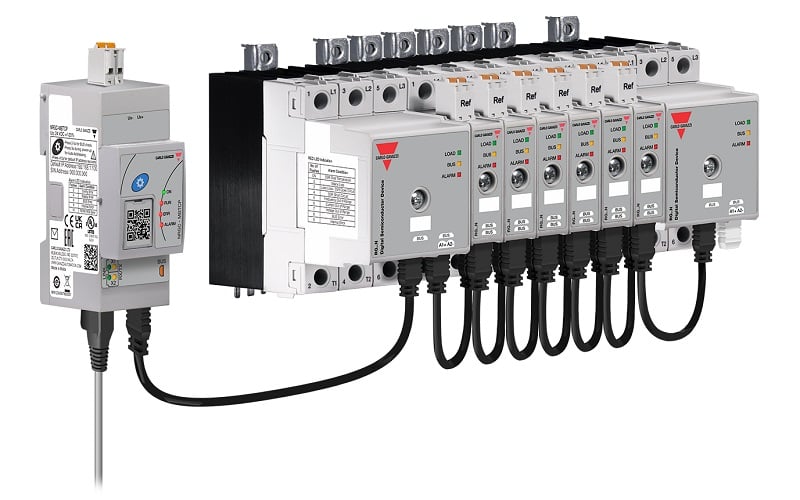
The NRG control system with multiple digital relay modules. Image used courtesy of Carlo Gavazzi
NRG Ecosystem
The NRG family of products includes a relay controller and numerous digital relay configurations, making it customizable for virtually any facility’s needs. RGC2 and RGC3 have been added to support two- and three-pole systems, respectively, expanding the versatility of this system without the need to reconfigure or purchase a new controller.
One advantage of replacing mechanical relays with the NRG series is the ability to monitor line parameters and track diagnostics in real time. Relays can be the first line of defense against unsafe operating conditions, such as overcurrent, and help operators reduce energy consumption. With onboard diagnostics, the NRG series of relays can identify potential problematic equipment.
In addition, these diagnostics can be used to enhance predictive maintenance models. For example, if a device is using more and more current, it could indicate a lack of lubrication, worn bearings, or other such problems. All of these problems would be hard to find with a mechanical relay, but can be pulled from the data stream of these digital relays.
Also, as solid-state devices, there are no mechanical components to wear out. These relays are low-maintenance and have a long lifespan.
RGC2 and RGC3 Features
Compared to mechanical relays, the RGC2 and RGC3 series have advanced switching capabilities and control features, making them more flexible for industrial applications. Instead of simple “on/off” control, these relays can be used in burst-fire mode, phase-angle mode, advanced full-cycle firing, distributed firing mode, and more. A soft-start mode saves energy and enables more tailored control of process parameters than a simple on/off controller.
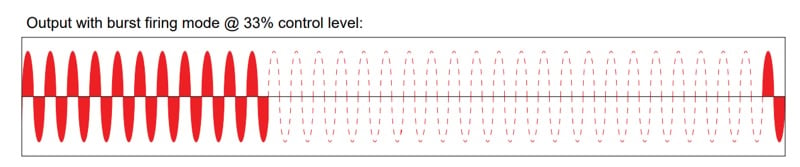
Relays can be used in burst-fire mode, providing greater flexibility for industrial applications. Image used courtesy of Carlo Gavazzi
In terms of installation, these newest relays have all the standard features one would expect on a digital relay. It is DIN-rail mountable and occupies a small footprint. However, one key advantage is that the communication electronics are built into the relay, eliminating the need for additional wiring and hardware. Each comes capable of communicating over PROFINET, EtherNet/IP, EtherCAT, or Modbus protocols.
Potential Applications
One of the key features of these digital relays is their continuous monitoring of voltage and current. This data stream can help troubleshoot energy hogs in the manufacturing facility, enabling engineers and plant managers to reduce operating expenses. Virtually any industry can benefit from this feature, along with all the other advantages these relays offer. In particular, Carlo Gavazzi expects these relays to benefit semiconductor and plastics manufacturing equipment.