Facebook
 Google
 GitHub
 Linkedin
DOE Adopts New Energy Standards for Expanded Scope Electric Motors
The U.S. Department of Energy has updated its energy conservation standards for expanded scope electric motors, effective April 7, 2025, with compliance required by January 1, 2029.
The Energy Policy and Conservation Act (EPCA) sets energy conservation standards for various consumer and commercial equipment. These standards aim to minimize energy consumption, promote efficiency, and ensure products are cost-effective and technologically feasible. The EPCA was initially created to address energy conservation and efficiency in response to the 1973 oil crisis, with goals such as reducing energy consumption, promoting energy efficiency, and ensuring energy security by managing domestic energy supplies.
The U.S. Department of Energy (DOE) recently updated the energy conservation standards for a specific group of electric motors, known as expanded scope electric motors (ESEMs). This update includes new standards designed to save significant amounts of energy, achievable with current technology and economically justified, meaning they make financial sense for manufacturers and consumers. These updates are part of the DOE’s ongoing efforts to ensure that energy conservation standards keep pace with technological advancements.
The U.S. Department of Energy has updated its energy standards for expanded scope electric motors. Image used courtesy of the Neal - stock.adobe.com
Energy Conservation Standards
The DOE follows a structured process to develop and implement energy efficiency standards. It begins with an initial analysis where data on current energy use and potential improvements are collected, and input from stakeholders such as manufacturers and energy efficiency advocates is sought.
The DOE then develops a proposal based on the information and publishes it as a Notice of Proposed Rulemaking (NOPR). The public is invited to comment on the proposal, ensuring all perspectives are considered. After reviewing the public comments, the DOE may revise the proposal and publish the final rule detailing the new or revised standards. The implementation phase follows, where the new standards come into effect on a specified date, and the DOE monitors compliance and enforces the standards.
For example, in the case of ESEMs, the DOE analyzed different trial standard levels (TSLs) and chose TSL 2 as it provided the maximum improvement in energy efficiency that was both technically viable and economically justified. These new standards will apply to ESEMs mentioned in the tables below, and all others imported/manufactured in the U.S. This thorough process ensures that the standards are effective, practical, and beneficial for consumers and the environment.
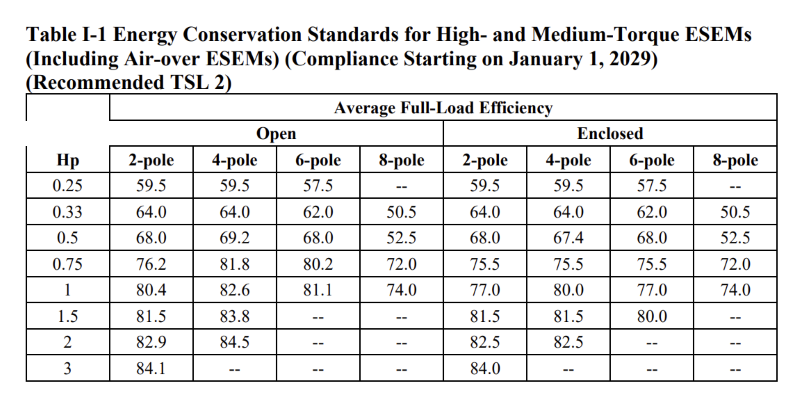
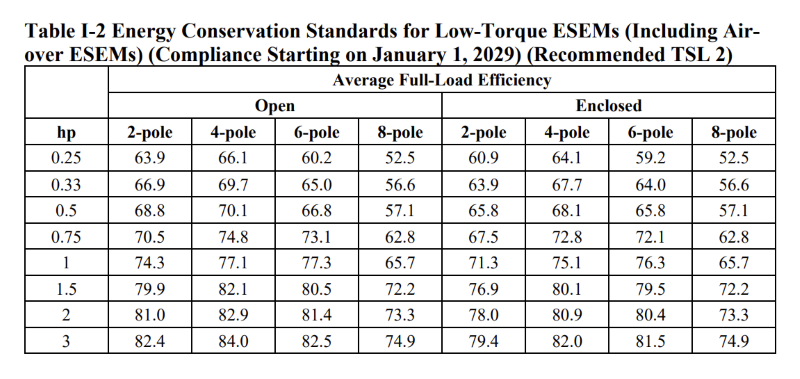
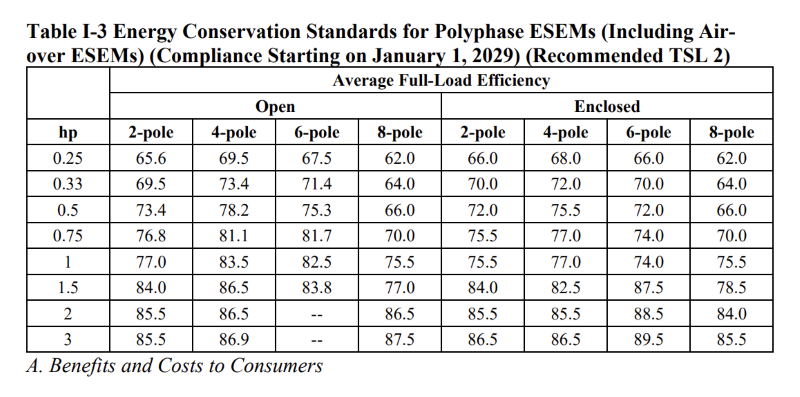
Table I-1 through Table I-3 show recommended TSL 2, the newly introduced standards for ESEMs. Images used courtesy of the U.S. Department of Energy
Standard Change Outcomes
The DOE created a chart to illustrate the predicted average life-cycle cost (LCC) and simple payback periods resulting from the new standards. The chart shows that the average LCC savings are positive for all equipment classes, indicating that over the lifetime of the equipment, the total costs of energy expenses are lower than those of less efficiency.
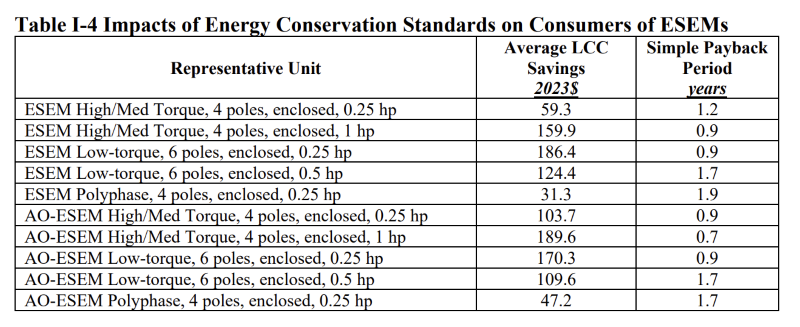
Table indicating the impacts of new energy conservation standards on consumers. Image used courtesy of the U.S. Department of Energy
A shorter payback period indicates a faster recovery of the initial investment. In essence, positive LCC savings and favorable payback periods suggest that the new standards will not only result in cost savings for customers but also benefit the environment through reduced energy consumption.
When?
This rule will officially take effect on April 7, 2025. However, compliance with the new standards for expanded scope electric motors will not be required until January 1, 2029. This gives companies and organizations time to prepare and adapt to the latest regulations.