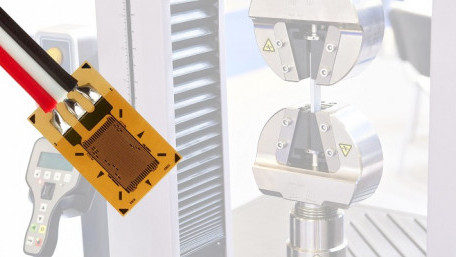
For being no more than a thin piece of metal, the strain gauge is a versatile measurement tool, from small switches to multi-ton machines. In this article, learn…
For being no more than a thin piece of metal, the strain gauge is a versatile measurement tool, from small switches to multi-ton machines. In this article, learn the operating principles and properties.

In this article, we will explore the inbound integration to the mage.ai pipeline, connecting to the spreadsheet data…
In this article, we will explore the inbound integration to the mage.ai pipeline, connecting to the spreadsheet data source using the Google Sheets API through a JSON credentials file.

Traditionally, automation requires a sizable investment and integration risks. RaaS empowers manufacturers to let someone…
Traditionally, automation requires a sizable investment and integration risks. RaaS empowers manufacturers to let someone else adopt the risks in exchange for an hourly or monthly subscription rate.

In the world of mechanical power transmission, gears, belts, and chains dominate the landscape, but what's so special…
In the world of mechanical power transmission, gears, belts, and chains dominate the landscape, but what's so special about chain drives, and why would they be used in place of rubber belts?

Hydraulic cylinders and actuators can quickly move heavy objects and provide strong clamping forces. But when they break…
Hydraulic cylinders and actuators can quickly move heavy objects and provide strong clamping forces. But when they break down, the effects can be catastrophic and the repairs costly and timely.

An overview of HMI data types, input controls, output indicators, and message functions, the building blocks used to…
An overview of HMI data types, input controls, output indicators, and message functions, the building blocks used to construct informative and appealing HMI applications.

Cobots have recently been hailed as one of the latest and greatest innovations in production and manufacturing…
Cobots have recently been hailed as one of the latest and greatest innovations in production and manufacturing automation. But are collaborative robots living up to their reputation? Control.com investigates the benefits and drawbacks of these versatile industrial machines.

Most commercial control technologies have fascinating histories, especially industrial robots. Here’s the story behind…
Most commercial control technologies have fascinating histories, especially industrial robots. Here’s the story behind the development of Unimate, the world’s first.

Some controllers and network devices have one port, while others have two. Why is there a difference, and what advantages…
Some controllers and network devices have one port, while others have two. Why is there a difference, and what advantages does having two network ports actually provide?

A walkthrough and discussion of a simple web-based HMI solution that could modernize your current HMI technology stack.…
A walkthrough and discussion of a simple web-based HMI solution that could modernize your current HMI technology stack. The first step in the process involves sending data from a device to a server.

Control.com’s Director of Engineering got to explore IO-Link sensors and what he found might surprise you! Although…
Control.com’s Director of Engineering got to explore IO-Link sensors and what he found might surprise you! Although still considered an “emerging” technology, it’s clear IO-Link technology boasts several bonafide benefits over traditional sensors.

Understanding the building blocks of s-domain analysis and magnitude response theory can go a long way in helping…
Understanding the building blocks of s-domain analysis and magnitude response theory can go a long way in helping engineers predict how and why some system design choices are made over others.

Refining and integrating a front-end HMI application to an API middle layer with real-time data display and historian…
Refining and integrating a front-end HMI application to an API middle layer with real-time data display and historian capabilities for short-term data visualization.

Learn the first steps in focusing on the integration of a front-end HMI application to an API middle layer.
Learn the first steps in focusing on the integration of a front-end HMI application to an API middle layer.

The middle layer, or API layer of a custom-built HMI project involves a server that can submit or receive data to and…
The middle layer, or API layer of a custom-built HMI project involves a server that can submit or receive data to and from a device, either to provide the user interface or interact with the machine.

User-defined data types (UDTs) are a powerful and useful tool when applied to their full advantage. However, misused,…
User-defined data types (UDTs) are a powerful and useful tool when applied to their full advantage. However, misused, they can become problematic and introduce roadblocks to troubleshooting and upgrading PLC programs.

Programmable encoders provide engineers real flexibility to adjust process parameters. From operating theory to…
Programmable encoders provide engineers real flexibility to adjust process parameters. From operating theory to programming methods, here’s everything you need to know to begin leveraging these handy devices.

Driving motors is one of the most fundamental automation tasks, but understanding and selecting the proper motor soft…
Driving motors is one of the most fundamental automation tasks, but understanding and selecting the proper motor soft starter for your application may require more investigation than you thought.

What are these terms, PLC, PAC, RTU, DCS, SCADA? Why are they so important to industrial robotics and automation? Explore…
What are these terms, PLC, PAC, RTU, DCS, SCADA? Why are they so important to industrial robotics and automation? Explore how each different piece functions to build a comprehensive automated system.

Many articles address the wiring and implementation of analog control signals, but where are they used, and what might…
Many articles address the wiring and implementation of analog control signals, but where are they used, and what might make them a better (or perhaps worse) decision than digital input/output devices?


 Facebook
 Google
 GitHub
 Linkedin