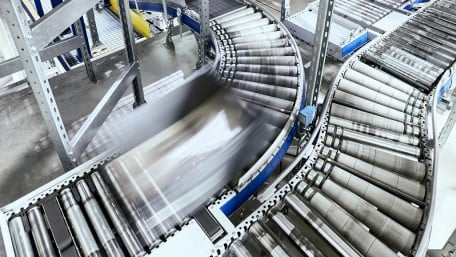
Conveyor systems come in all shapes and sizes, with factors like the drive motor and conveyor style influencing the control method. Join us as we dive into the…
Conveyor systems come in all shapes and sizes, with factors like the drive motor and conveyor style influencing the control method. Join us as we dive into the world of automated conveyance.

Even though electrical safety practices have existed for over a century, arc flash safety has only gained traction in…
Even though electrical safety practices have existed for over a century, arc flash safety has only gained traction in recent decades. This article discusses the danger and prevention of arc flash injury.

Inputs and outputs play crucial roles in various automated processes. This article will explain the variances between…
Inputs and outputs play crucial roles in various automated processes. This article will explain the variances between digital and group I/O and offer guidance on setting up each type through Ethernet.

The simple tasks can lead to the most failures. Basic practices in the wiring assembly stages of a project can lead to…
The simple tasks can lead to the most failures. Basic practices in the wiring assembly stages of a project can lead to long-term success or haunting tales of intermittent yet persistent failures.

The SLC 500 PLC family dominated automation control for well over thirty years and now, with the recent discontinuation…
The SLC 500 PLC family dominated automation control for well over thirty years and now, with the recent discontinuation of most of the series, we look at the differences between SLC and modern Logix PLCs.

The OPC UA protocol is designed to solve two problems in automation: interoperability between device vendors and…
The OPC UA protocol is designed to solve two problems in automation: interoperability between device vendors and independence from incompatible transport layer differences.

Some terminology, like 'normally open' and 'normally closed' switch contacts, is common throughout industry but can still…
Some terminology, like 'normally open' and 'normally closed' switch contacts, is common throughout industry but can still be confusing, misleading, or even hazardous if not properly understood.

Embedded, modular, panel mount, distributed, machine mount, and remote, oh my! What does it all mean, and how are you…
Embedded, modular, panel mount, distributed, machine mount, and remote, oh my! What does it all mean, and how are you supposed to know which one to choose for your application?

Regardless of industry, codes and standards developed by organizations including ISO, ANSI, and IEEE are an integral part…
Regardless of industry, codes and standards developed by organizations including ISO, ANSI, and IEEE are an integral part of the environment in which we work and have a major influence on engineering and design.

Electrical grounding is used to accomplish several different tasks, but none more important than for the safety of users…
Electrical grounding is used to accomplish several different tasks, but none more important than for the safety of users and equipment while maintaining strict adherence to regulations.

Join Control Automation for a visit to Beckhoff USA in Minneapolis, MN, as we learn about cabinet-free controls,…
Join Control Automation for a visit to Beckhoff USA in Minneapolis, MN, as we learn about cabinet-free controls, high-speed motion, and magnetic conveyance working to drive the future of the industry.

Learn all about the power supply: modular and built-in devices that deliver electricity to the PLC backplane and modules,…
Learn all about the power supply: modular and built-in devices that deliver electricity to the PLC backplane and modules, and learn the difference between control and field device power delivery.

Across every make and model of articulated robot, certain maintenance procedures must be followed as motion occurs.…
Across every make and model of articulated robot, certain maintenance procedures must be followed as motion occurs. Failure to do so can often result in warnings, alarms, and even failure.

Some devices, like switches, are non-polar; you can connect them in either direction. What makes diodes so special, and…
Some devices, like switches, are non-polar; you can connect them in either direction. What makes diodes so special, and how can you tell the right way from the wrong way?

Ladder logic is an industrial control systems legend stemming from electrical line diagrams before the days of PLCs.…
Ladder logic is an industrial control systems legend stemming from electrical line diagrams before the days of PLCs. Although logical, they are difficult to interpret.

Several use cases for industrial AI get a lot of attention, like maintenance and process optimization. Learn how AI has…
Several use cases for industrial AI get a lot of attention, like maintenance and process optimization. Learn how AI has been used for years to ensure high-quality product monitoring and output.

Every element of your life–your food, your car, your house–everything is made with processes that use sensors. Join…
Every element of your life–your food, your car, your house–everything is made with processes that use sensors. Join us as we visit the SICK facility, where many of these sensing products are made.

Many online sources explain how to reverse a 3-phase motor; this article will discuss the electrical principles that…
Many online sources explain how to reverse a 3-phase motor; this article will discuss the electrical principles that define why it works and how the phase relationships determine the rotation direction.

Predicting when maintenance should occur isn’t simply a matter of getting on board with the latest trend, it can save…
Predicting when maintenance should occur isn’t simply a matter of getting on board with the latest trend, it can save many thousands of dollars in lost downtime and unnecessary parts and labor.

Hairpin motors are becoming popular with electric vehicle manufacturers, but what sets them apart from traditional…
Hairpin motors are becoming popular with electric vehicle manufacturers, but what sets them apart from traditional electric motors? And, if they are so great, why not use them in all applications?


 Facebook
 Google
 GitHub
 Linkedin