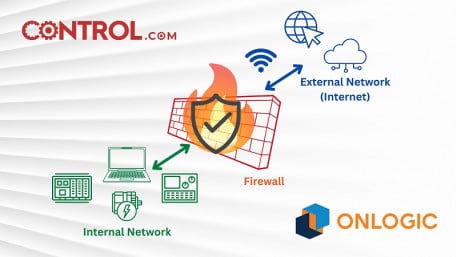
I had some questions about firewalls for industrial networks, topics like selecting, configuring, and updating the software, so I turned to some experts for a…
I had some questions about firewalls for industrial networks, topics like selecting, configuring, and updating the software, so I turned to some experts for a little advice.

Finding a good PLC simulator can be challenging. Read an assessment of Factory I/O and learn how it works, how to get…
Finding a good PLC simulator can be challenging. Read an assessment of Factory I/O and learn how it works, how to get started, and how to use it in your automation learning journey.

IO-Link technology keeps improving, and with the recent introduction of Safe IO-Link, the automation world is going to…
IO-Link technology keeps improving, and with the recent introduction of Safe IO-Link, the automation world is going to get a whole lot more modular.

IO-Link has established itself as a reliable field network that’s constantly evolving with new generations of devices.…
IO-Link has established itself as a reliable field network that’s constantly evolving with new generations of devices. Learn how to configure logic directly on the IO-Link master.

H-bridge circuits are commonly used to provide current switching capabilities to different electrical components in…
H-bridge circuits are commonly used to provide current switching capabilities to different electrical components in automated systems like motor control circuits, VFDs, and DC/AC current conversions.

In this article, we’ll connect a Festo CMMT to a Rockwell CompactLogix PLC, and as a bonus, we’ll add an HMI to…
In this article, we’ll connect a Festo CMMT to a Rockwell CompactLogix PLC, and as a bonus, we’ll add an HMI to provide some basic on/off and positional targeting controls.

DIN valve connectors, not to be confused with DIN rails, are a common electrical connector for valves in the automation…
DIN valve connectors, not to be confused with DIN rails, are a common electrical connector for valves in the automation industry, efficiently providing power to valves, sensors, and even small motors.

We know that PID stands for proportional, integral, and derivative, but have you ever seen exactly how the derivative…
We know that PID stands for proportional, integral, and derivative, but have you ever seen exactly how the derivative term affects the final output signal in a motion control system?

A well-designed SCADA system can reduce costs, increase throughput, and improve usability. Successful implementation…
A well-designed SCADA system can reduce costs, increase throughput, and improve usability. Successful implementation requires consideration from both an operational and a business perspective.

Some new factories are networked from stem to stern, ready to roll. But sometimes, it’s just you and a new PLC, so it…
Some new factories are networked from stem to stern, ready to roll. But sometimes, it’s just you and a new PLC, so it won’t really matter how you set things up, it’ll probably work just fine, right?

Unexpected, false, and fluctuating PLC input signals can cost many hours of debugging, but luckily, there are some quick,…
Unexpected, false, and fluctuating PLC input signals can cost many hours of debugging, but luckily, there are some quick, simple tricks to try before downtime is wasted.

Dynamic braking resistors stop motors more quickly by converting the rotational energy, but how do we select the correct…
Dynamic braking resistors stop motors more quickly by converting the rotational energy, but how do we select the correct one and configure a PowerFlex drive to utilize the resistor effectively?

When the blinking lights on automation devices stop blinking, the control cabinet is often the go-to troubleshooting…
When the blinking lights on automation devices stop blinking, the control cabinet is often the go-to troubleshooting culprit, but how do you make the best judgments for quickly locating the problem?

Using an Arduino Opta PLC, a few off-the-shelf electrical components, and the popular OpenPLC software environment,…
Using an Arduino Opta PLC, a few off-the-shelf electrical components, and the popular OpenPLC software environment, automation control concepts can be built on your own test bench.

It can be risky to adopt unknown technology; it poses serious security concerns if misused. The Control.com engineering…
It can be risky to adopt unknown technology; it poses serious security concerns if misused. The Control.com engineering team contacted our friends at OnLogic to gain some insight into VPN technology.

Filters and reactors can protect your electrical devices, but what is the difference between these two kinds of devices,…
Filters and reactors can protect your electrical devices, but what is the difference between these two kinds of devices, and are they supposed to be installed before or after a VFD?

CODESYS is an automation software that is independent from any one vendor, capable of many PLC, I/O, and motion…
CODESYS is an automation software that is independent from any one vendor, capable of many PLC, I/O, and motion operations. However, being vendor-agnostic can present challenges. Learn how to get started.

The purpose of LOTO is to create a method of reducing the chance that a worker will be exposed to hazardous energy.…
The purpose of LOTO is to create a method of reducing the chance that a worker will be exposed to hazardous energy. It’s important for companies to establish an SOP for standardized LOTO practice.

Have you ever disassembled a motor and wondered how it rotates? Throughout this article, we’ll discuss electromagnetic…
Have you ever disassembled a motor and wondered how it rotates? Throughout this article, we’ll discuss electromagnetic induction and how magnetic fields can be utilized to generate motion.

The choice to ground or float a power supply is not always clear in the NEC. This article explains floating or fixing a…
The choice to ground or float a power supply is not always clear in the NEC. This article explains floating or fixing a DC supply with respect to ground and how circuits can be functionally constructed both ways.


 Facebook
 Google
 GitHub
 Linkedin